


In one of Maharashtra's most climate-hit talukas, a joint initiative by Atlas Copco India and The Art of Living is turning barren land into a sustainable fodder source for livestock — and rebuilding the livelihoods that depend on them.
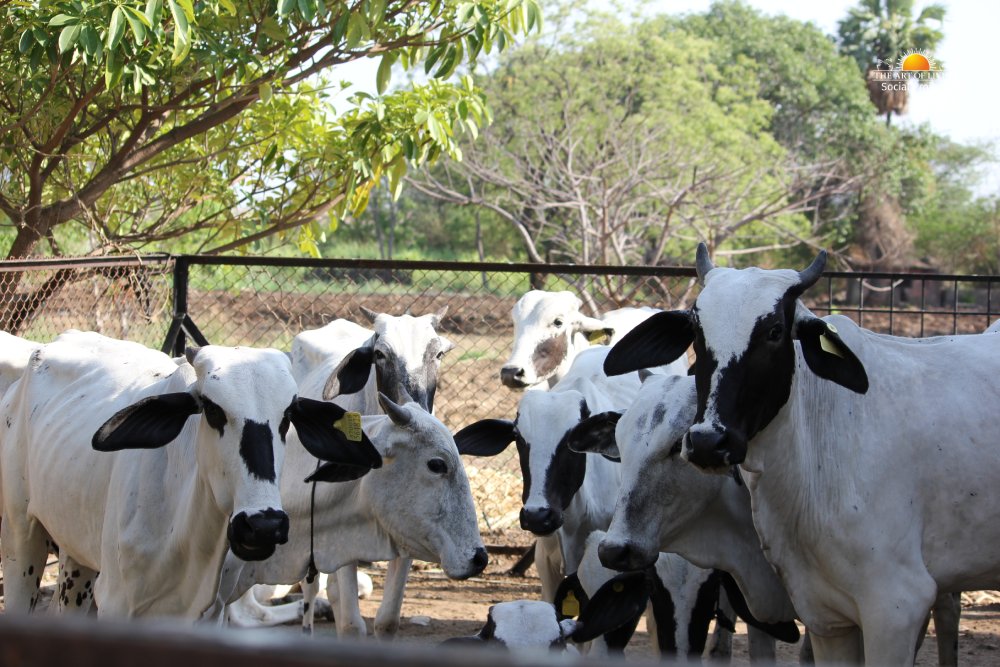
Udgir taluka in Latur district, Maharashtra, was once famous for milk. The region is home to a renowned veterinary college and the prized local Deoni cattle breed. In the 1950s and 60s, milk from Udgir was transported daily to Mumbai — a supply chain built on abundant grazing land and a climate that supported it.
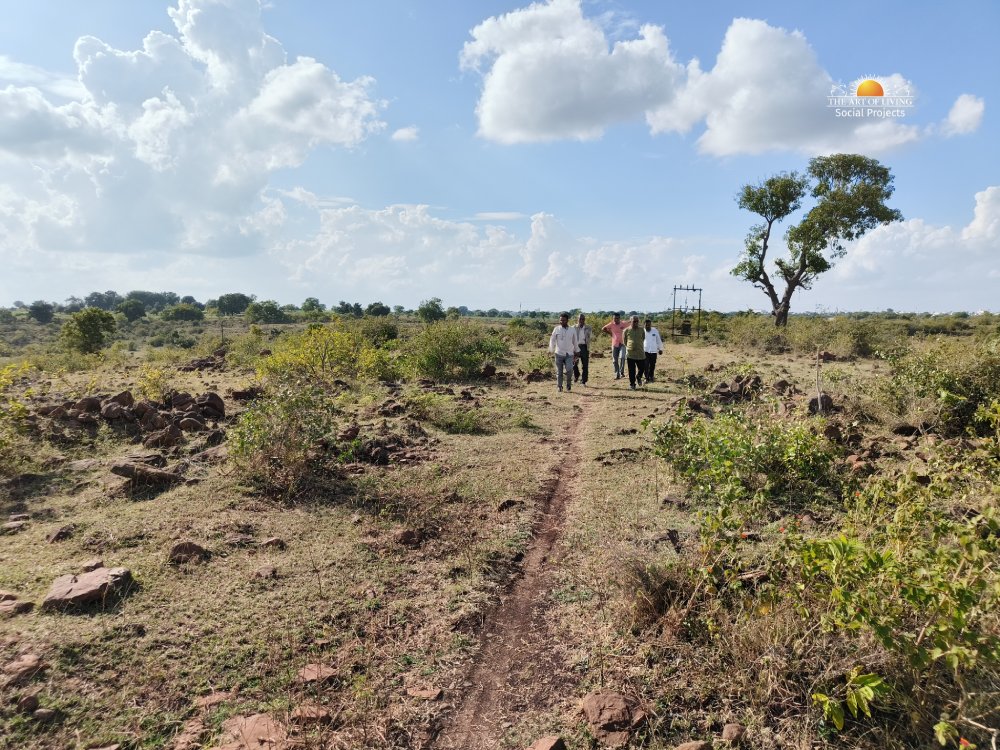
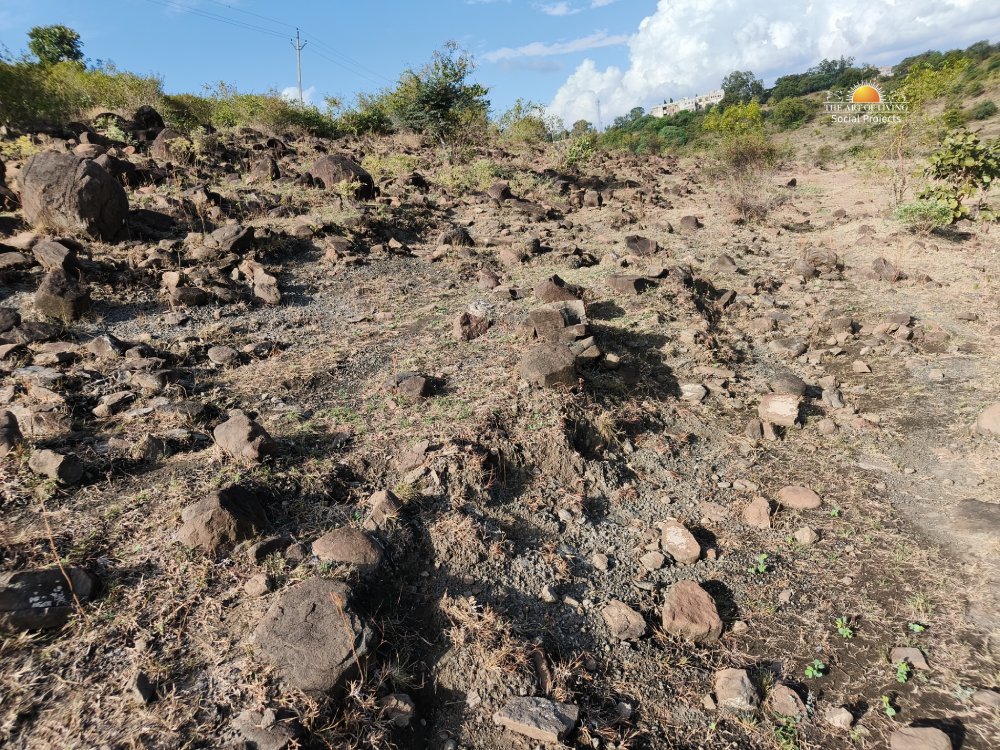
Over the decades, that changed. Rainfall became sparse. Summers turned extreme. And the fodder that cattle depended on disappeared. With less than one percent of the area under tree cover today, there is simply not enough natural feed for livestock. Milk production collapsed. The farmers who built their lives around it were left without a reliable income.
The problem was not a shortage of trees. It was a shortage of fodder. But the solution, it turned out, lay in the right trees.
A Fodder Solution, Designed from the Ground Up
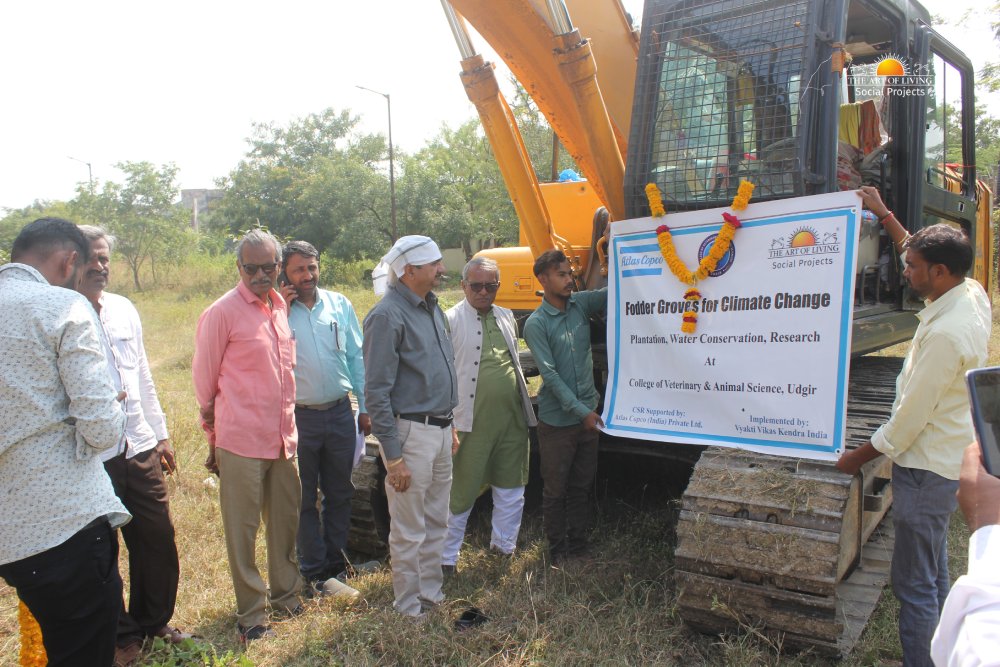
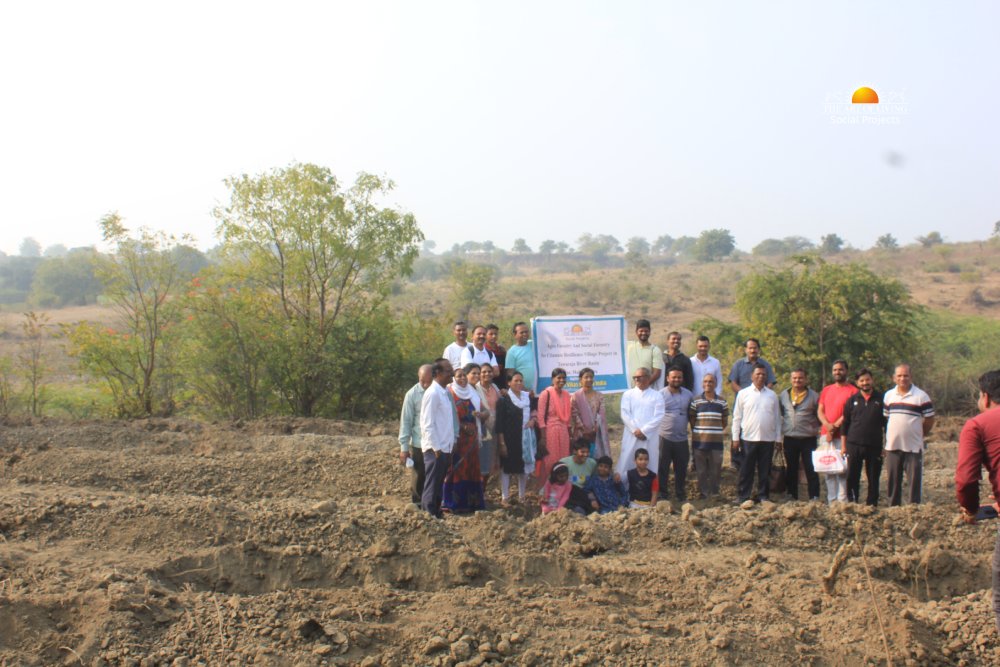
In February 2023, Atlas Copco India Private Limited — a global industrial technology company that manufactures compressors, vacuum solutions, and industrial tools — partnered with Vyakti Vikas Kendra India (VVKI), a public charitable trust of The Art of Living, to take this on. The project was called Climate Change for Fodder Groves.
The objective was not afforestation for its own sake. It was specific: give farmers a way to produce wholesome, nutrition-rich fodder for their cattle on their own farmland, sustainably, using trees native to the region.
Under the technical guidance of Dr. P. Tetali, twenty-seven tree species were selected — each for what it could contribute to the fodder chain. Neem, Siris, Bamboo, Limbara, and Hadga for high-quality cattle feed. Bilva and Drumstick for medicinal and nutritional value. Custard Apple and Phalsa for fruit that supplements household income. Every species chosen had to earn its place on the basis of what it would give back — to the cattle, the soil, or the farmer.
Fixing the Water Before Planting the Trees
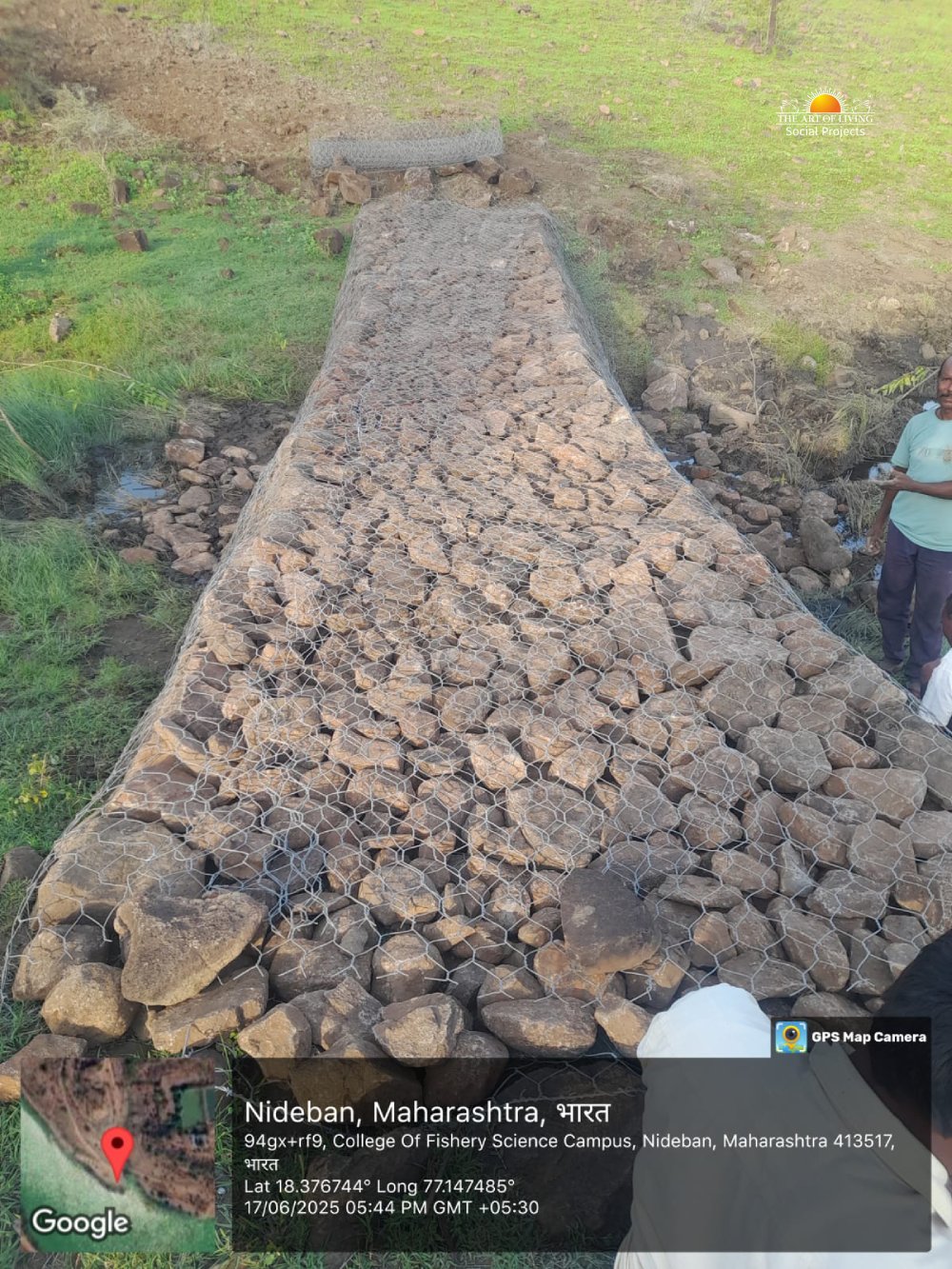
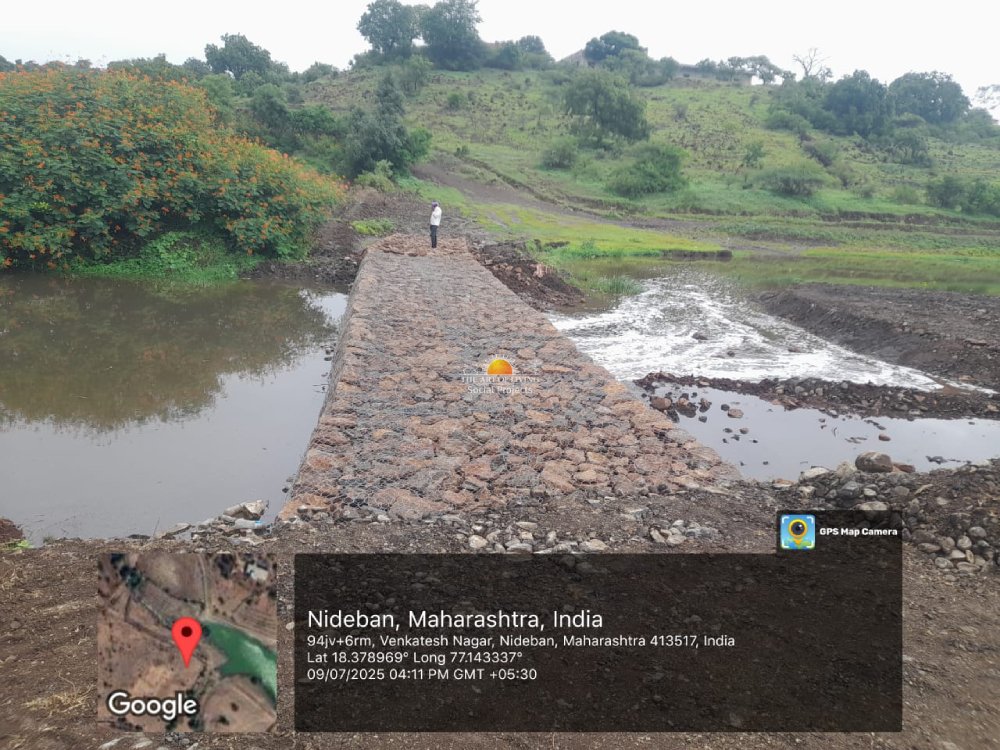
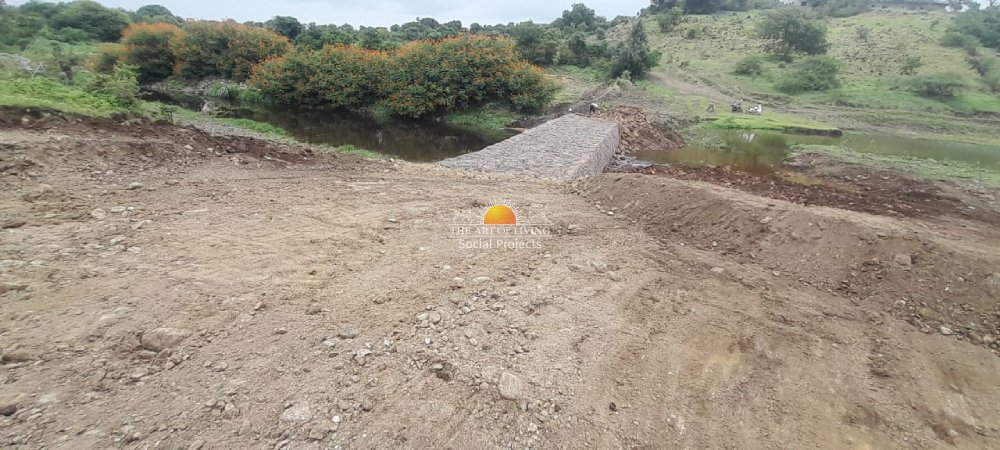
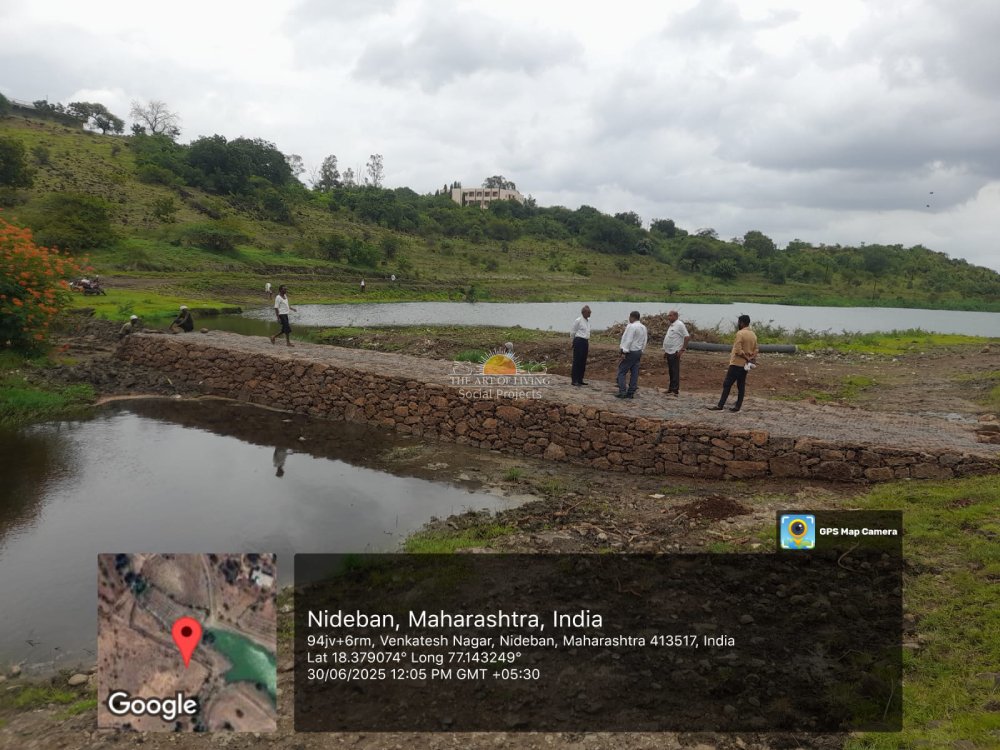
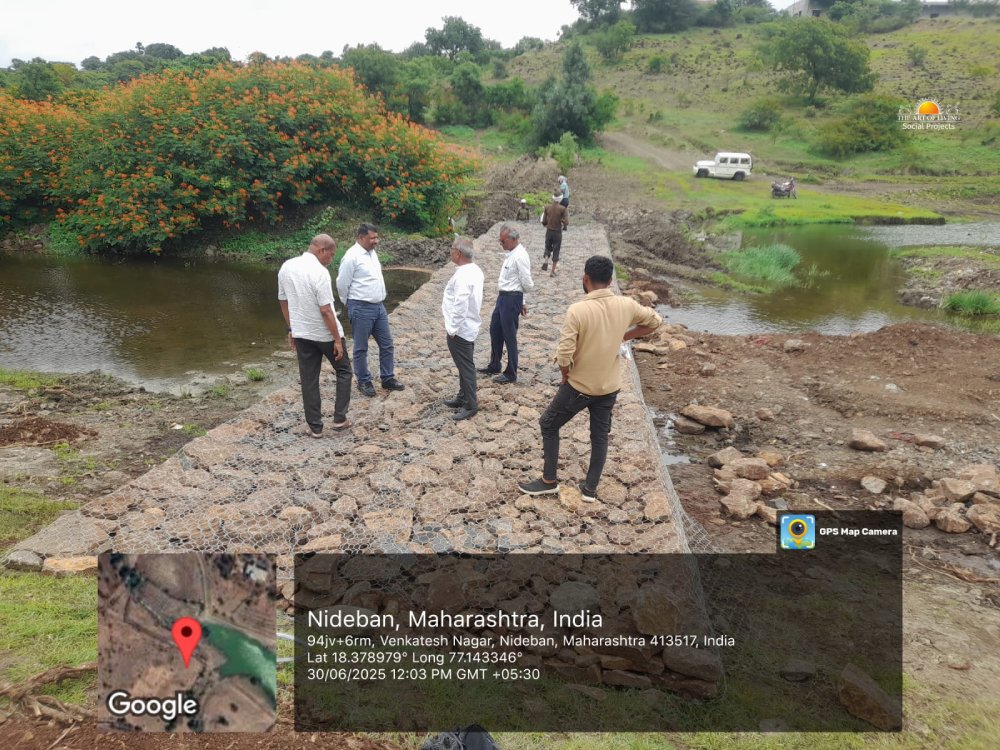
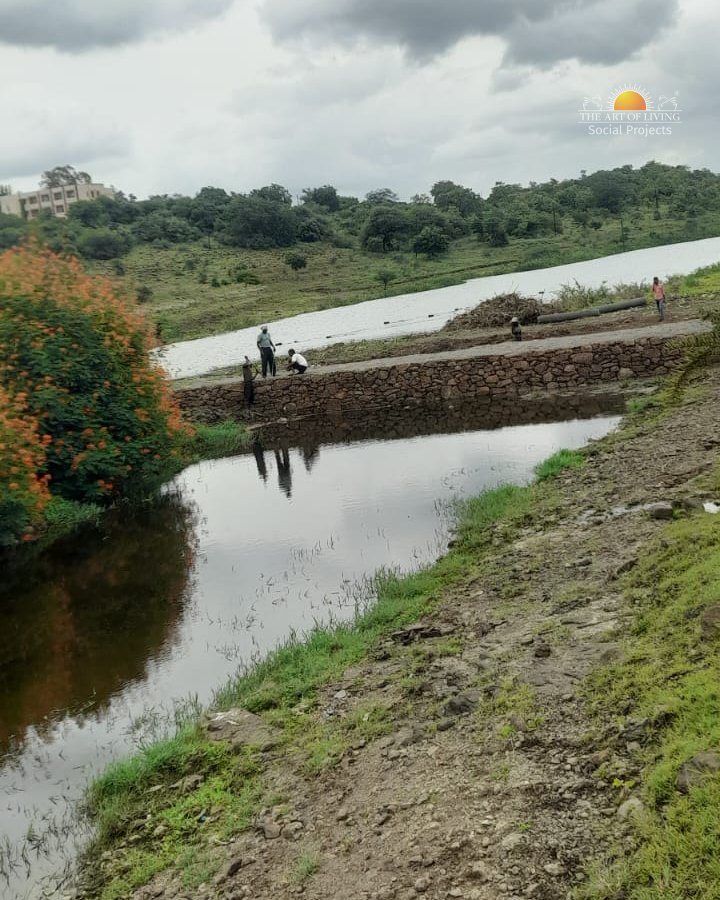
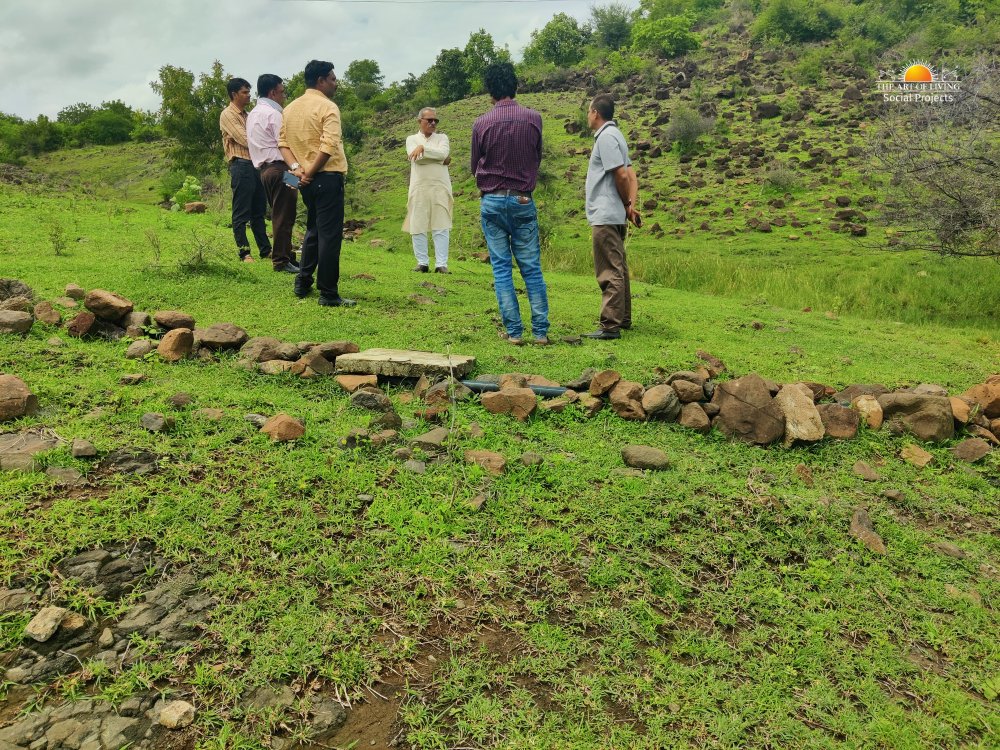
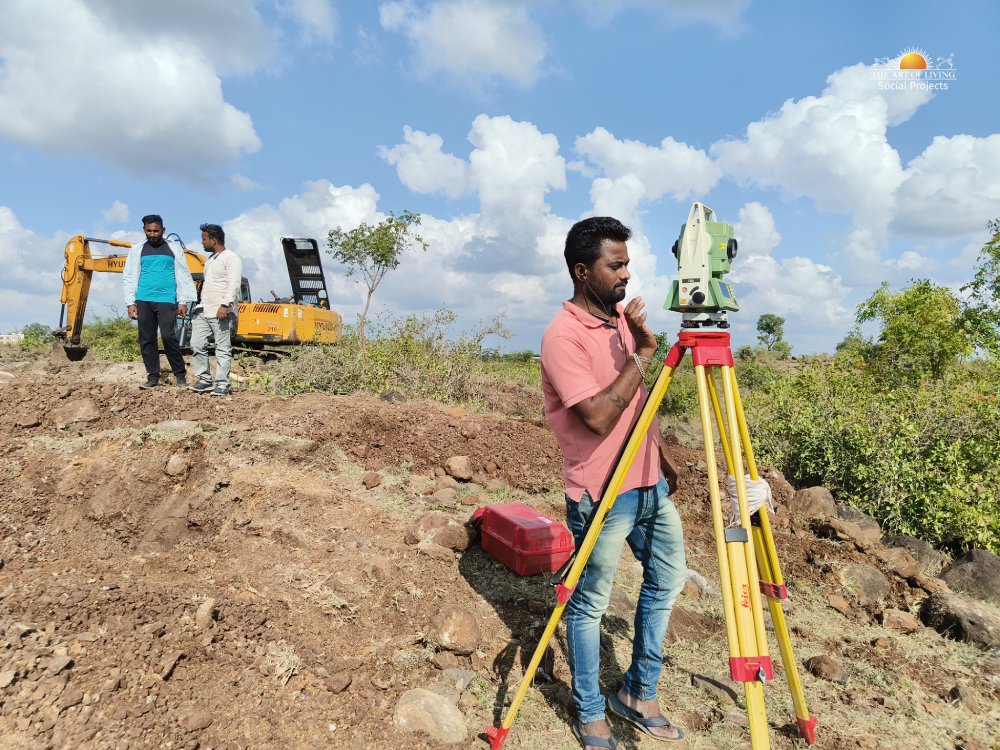
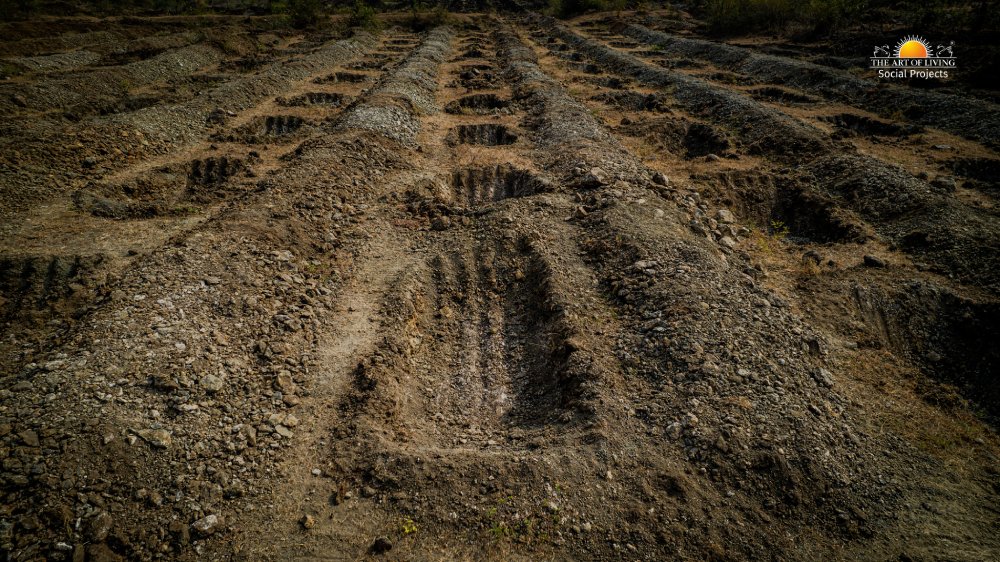
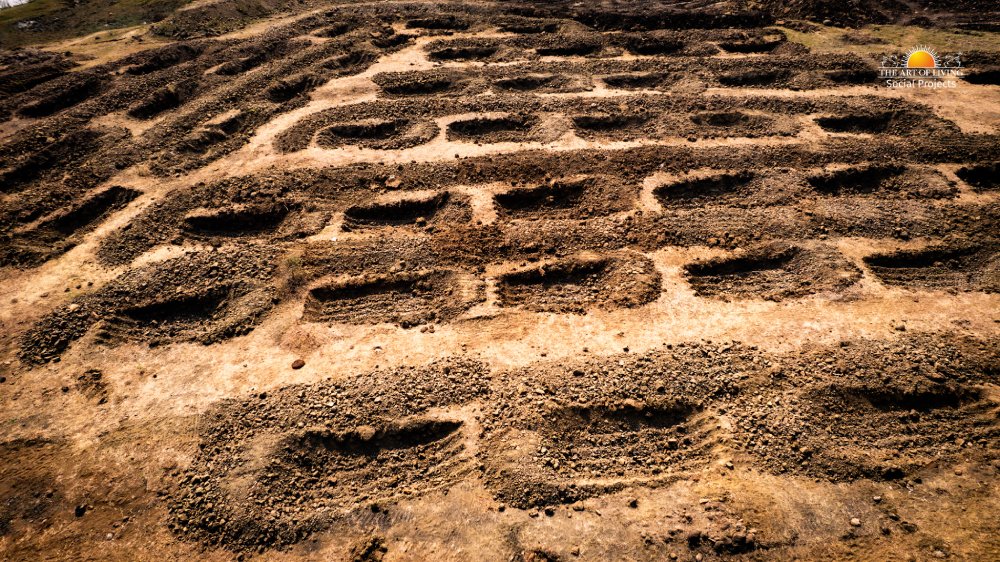
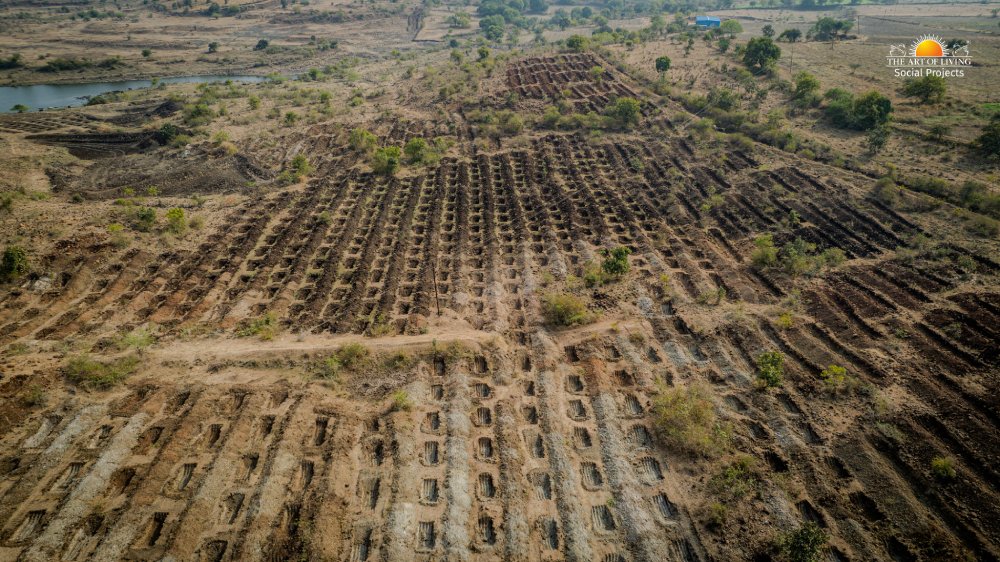
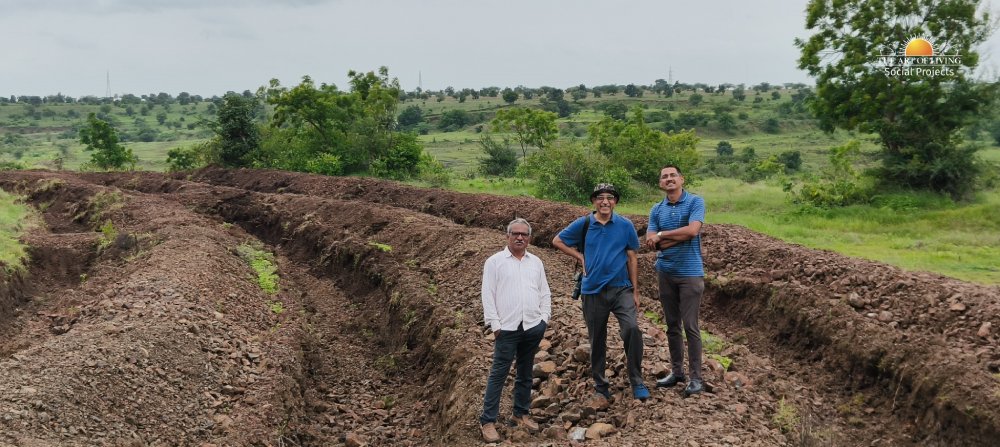
The land couldn't support fodder trees without first fixing how water moved through it. A complete contour survey was done, and Continuous Contour Trenches (CCTs) were dug along the natural slopes. These are channels that intercept rainwater as it flows downhill, slow it down, and let it soak into the ground instead of running off and taking the topsoil with it.
Three gabion structures — walls of galvanized steel mesh filled with stone — were built along the main drainage lines to hold back soil during heavy rains and stabilise vulnerable stretches.
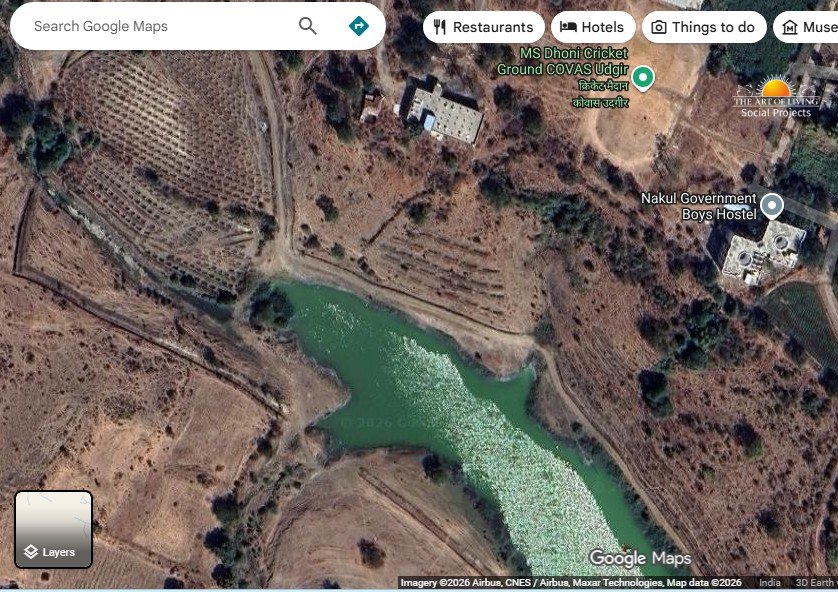
The results showed up in the first monsoon itself. The CCTs held large volumes of water. Ponds created on site retained enough through the rainy season to sustain the plantation during the dry months that followed. Groundwater levels in the area started rising.
A Nursery Run by Local Women Raised the Saplings
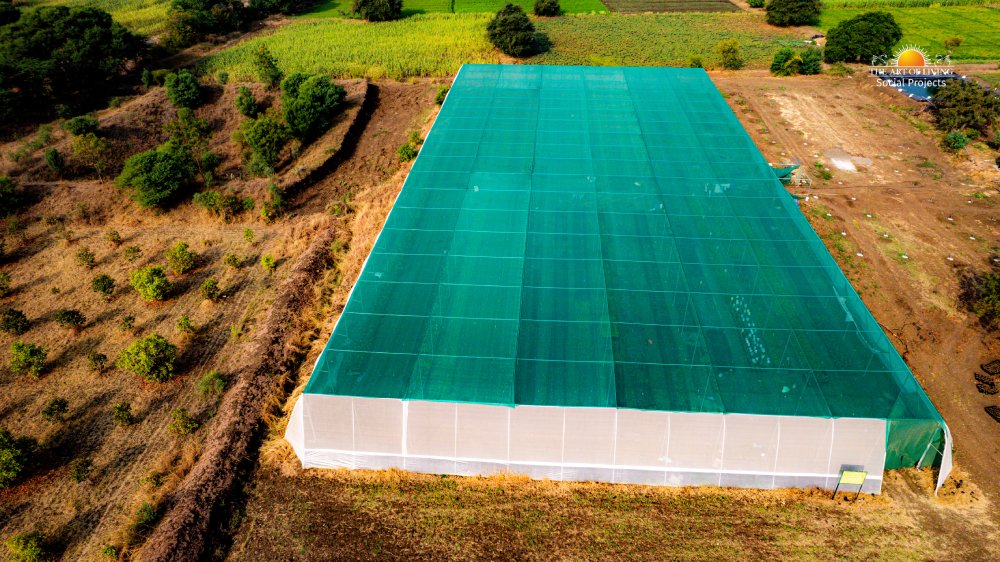
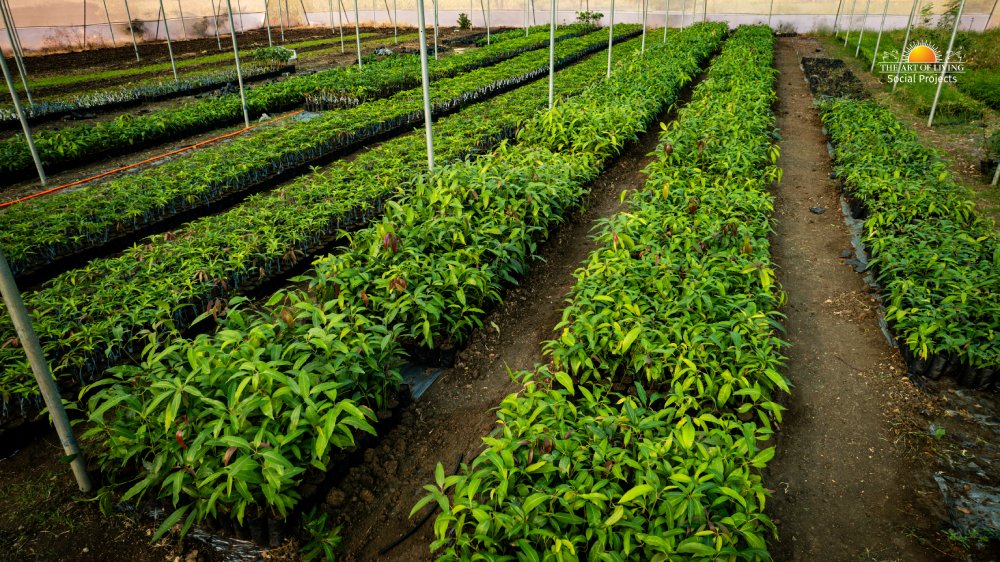
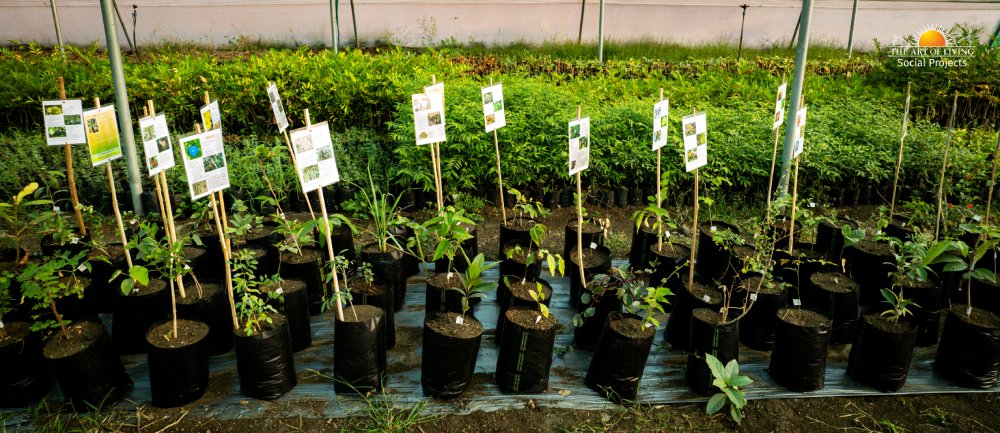
Seeds were collected from native trees in the area, and a plant nursery was set up on site. Women from surrounding villages were trained in nursery management — propagation, care, transplanting. This gave them a skill, an income source, and a direct stake in the project's success. It also kept costs down.
The saplings they raised were planted across the site during the monsoon seasons. Every single one was geo-tagged — photographed, time-stamped, and mapped with GPS coordinates for full accountability.
60,356 Trees. 27 Species. All Standing.
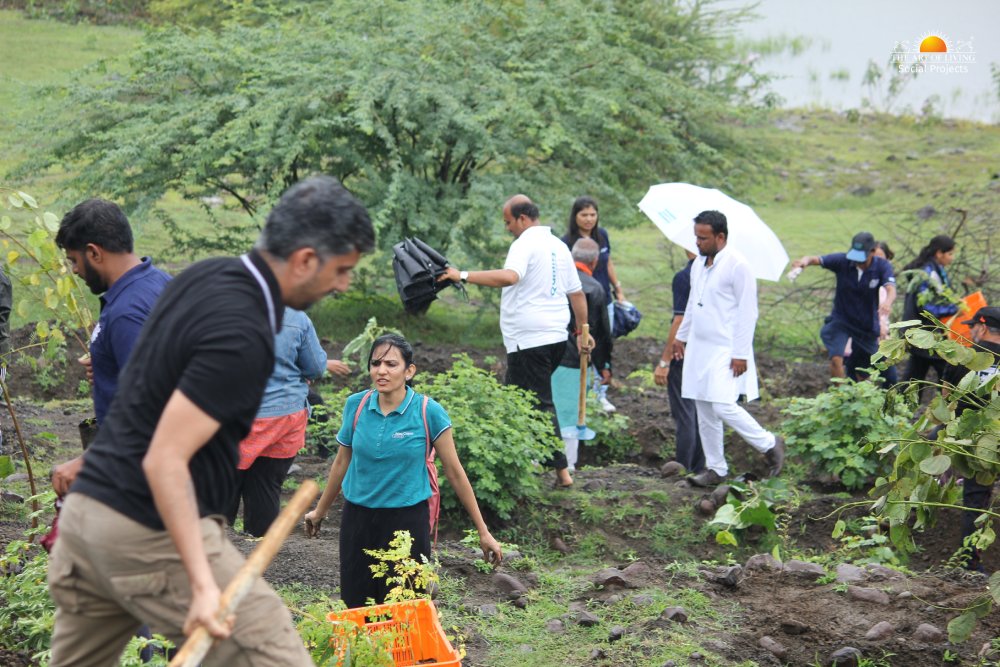
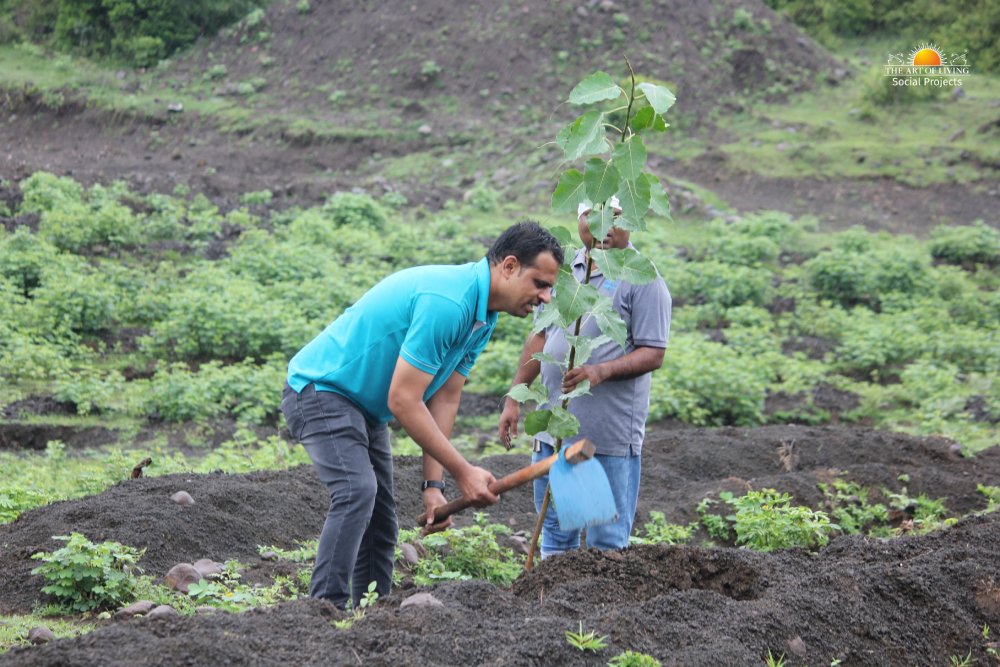
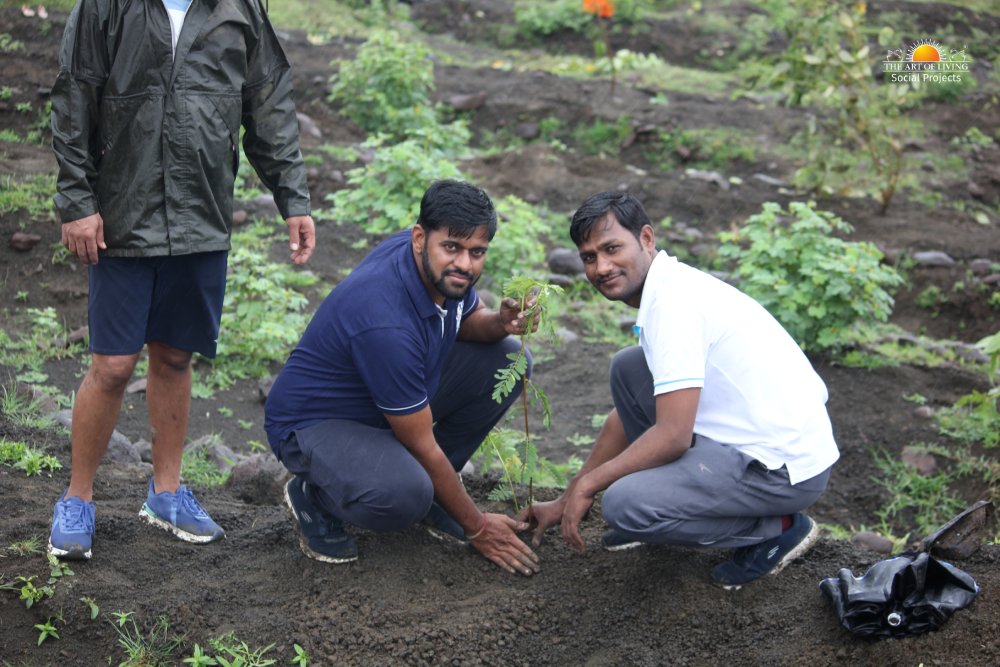
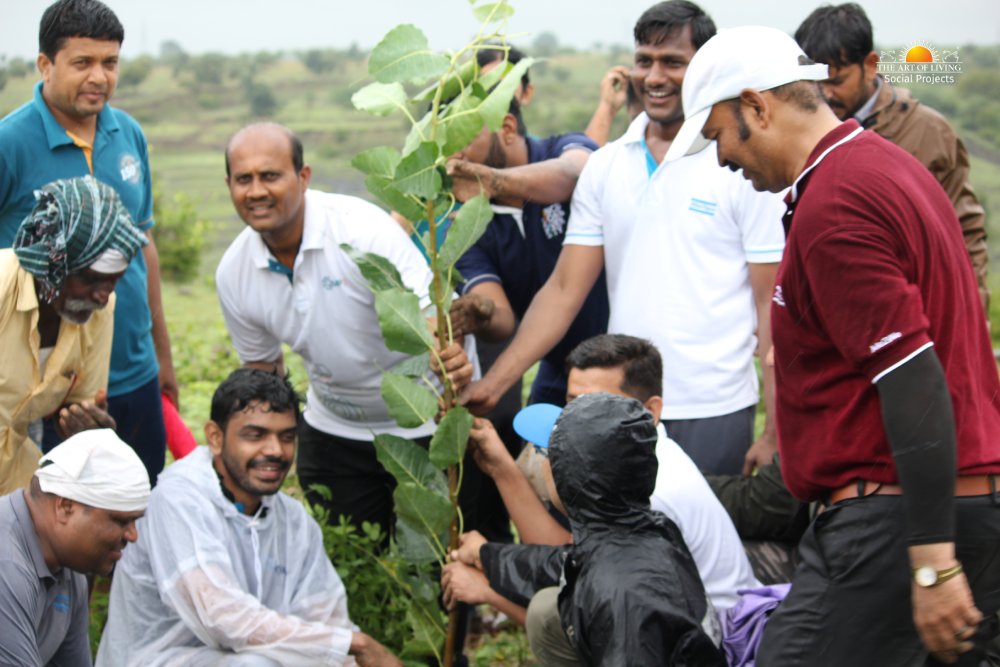
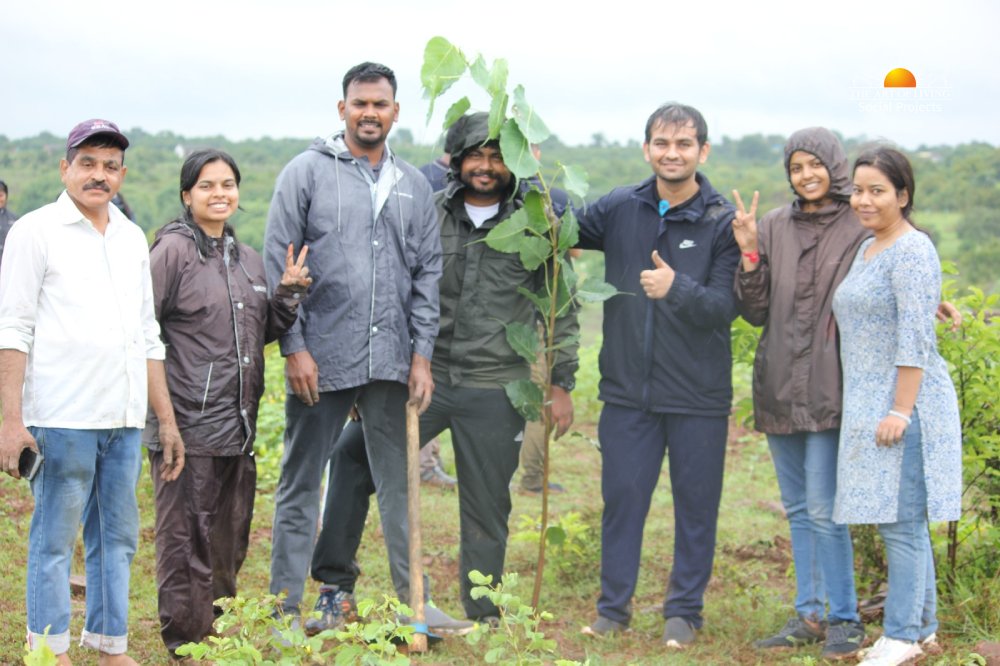
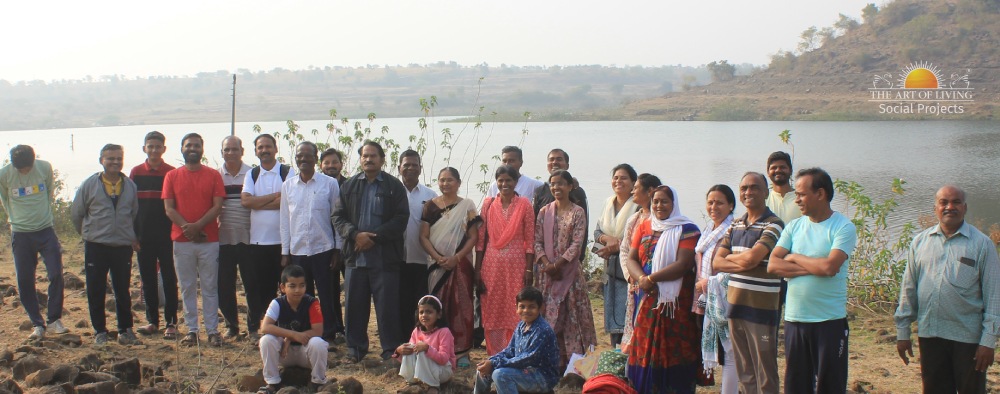
As of February 2026, plantation at the site is complete. 60,356 trees across 27 species are in the ground. The five largest plantings by volume are Bamboo (11,941), Neem (11,251), Siris (8,140), Limbara (5,900), and Hadga (3,990).
This is not a plant-and-forget project. Between October 2025 and February 2026 — the harshest dry months — the team carried out regular deweeding and watering to keep the young trees alive. Continuous monitoring and community involvement ensure this results in lasting green cover, not a single-season effort.
The Land Is Already Responding
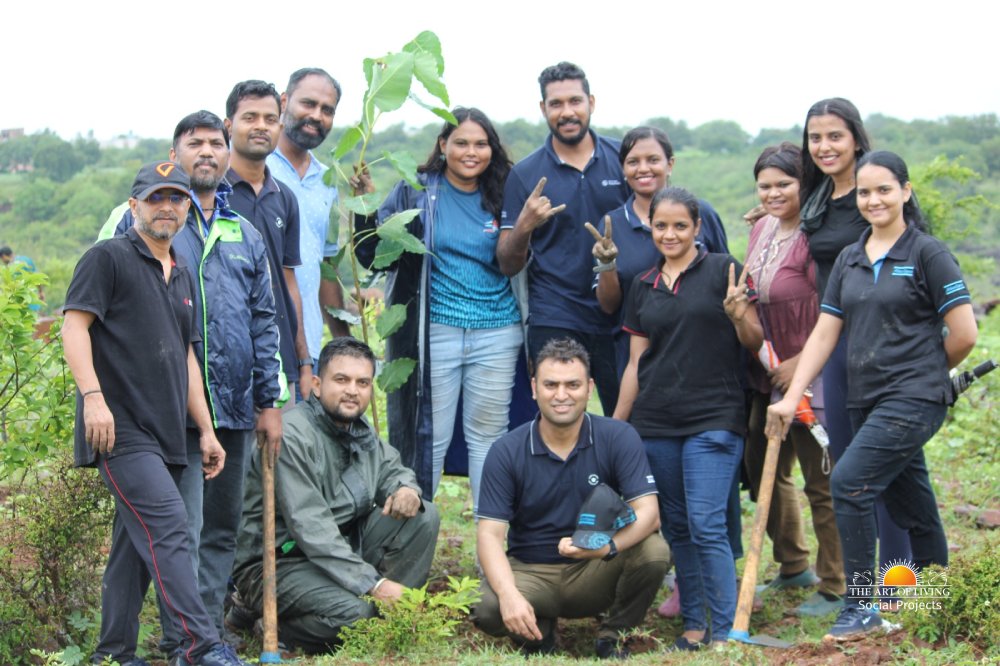
Biodiversity is returning to the area. Various animals, birds, and butterflies have been observed on site — drawn by the growing tree cover and improved water availability. Where there was only dry, bare ground a few years ago, there is now the beginning of an ecosystem.
In the years ahead, this site is expected to serve as a living demonstration for Udgir — proof that degraded land can be brought back to productive use when the intervention is designed around the actual problem. In this case, the problem was never "not enough trees." It was "not enough fodder." The trees were the answer, not the question.
The equation for farmers is becoming clear: nutritious fodder from native trees, healthier cattle, lower input costs, and a landscape that works for them instead of against them.
The Fodder Groves for Climate Change project is implemented by Vyakti Vikas Kendra India (VVKI), a public charitable trust of The Art of Living, in partnership with Atlas Copco India Private Limited. For more information about our environmental initiatives, visit vvki.artofliving.org.